In this guide, we’ll cover how to calculate motor power of the centrifugal pump:
The difference between hydraulic power, pump shaft power, and motor input power.
The formulas used for calculation.
A step-by-step example.
A free online calculator you can use instantly.
In industrial operations, pumps are essential for moving liquids from one point to another. Whether in steel plants, chemical factories, or water treatment facilities, understanding pump shaft power and motor input power is crucial for selecting the right pump and motor combination. This ensures optimal performance, energy efficiency, and reduced operational costs.
What is a Pump?
A pump is a mechanical device designed to move fluids such as water, oil, chemicals, or slurries. It works by adding energy to the fluid, enabling it to flow against gravity, pressure, or resistance in a pipeline system.
Two important parameters of a pump are:
Flow Rate (Q): The amount of fluid the pump can move, usually measured in cubic meters per hour (m³/hr).
Head (H): The height or pressure the pump can generate, expressed in meters.
Understanding Pump Power Terminologies
When calculating pump power, three important terms come into play:
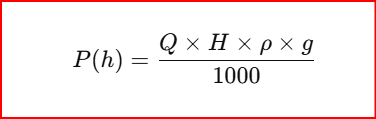
1. Hydraulic Power (Ph)
Hydraulic power is the actual energy transferred to the liquid by the pump. Formula:
Where:
Q = Flow rate (m³/s)
H = Head (m)
ρ = Density of liquid (kg/m³)
g = Acceleration due to gravity (9.81 m/s²)
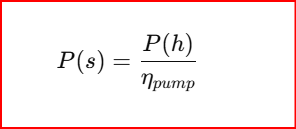
2. Pump Shaft Power (Ps)
Pump shaft power is the actual power required at the pump shaft. It accounts for pump efficiency losses. Formula:
Where:
ηₚᵤₘₚ = Pump efficiency (decimal)
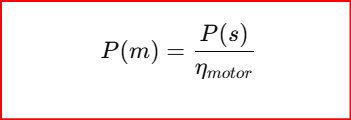
3. Motor Input Power (Pm)
Motor input power is the electrical power required to drive the pump shaft, considering motor efficiency. Formula:
Where:
ηₘₒₜₒᵣ = Motor efficiency (decimal)
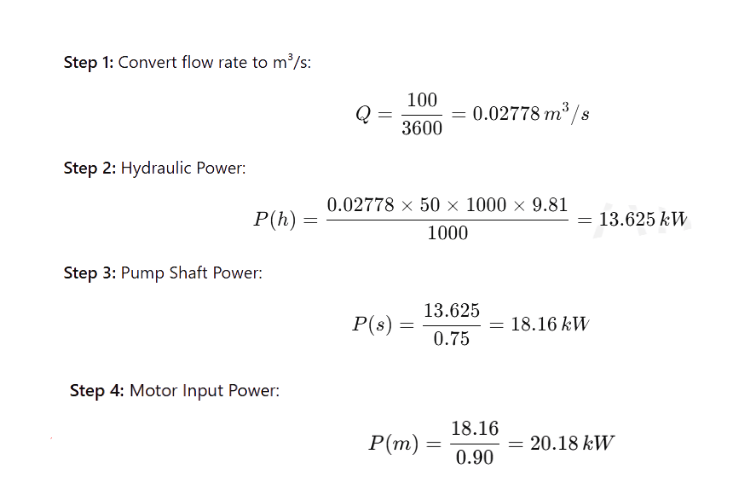
Example Calculation
Let’s consider:
Flow rate (Q) = 100 m³/hr
Head (H) = 50 m
Pump efficiency = 75%
Motor efficiency = 90%
Free Online Pump Power Calculator
To make this easier, we’ve created a Pump Shaft Power & Motor Power Calculator (embedded above). Simply enter the flow rate, head, pump efficiency, and motor efficiency, and the tool will instantly give you:
Hydraulic Power (kW)
Pump Shaft Power (kW)
Motor Input Power (kW)
Why This Calculation Matters
Accurate pump and motor sizing helps to:
Avoid oversizing and energy wastage.
Improve system reliability.
Reduce maintenance costs.
Extend motor life.
In many industries, motors are selected with a 10-15% safety margin over the calculated motor input power to handle unexpected load variations.
Conclusion
Calculating pump shaft power and motor input power is essential for efficient pump operation. Using the given formulas and our free online calculator, you can quickly determine the required power for your system, ensuring the right equipment selection.
This blog is more than just a collection of technical articles—it’s a platform where practical insights meet real-world applications. Whether you’re looking for in-depth electrical engineering concepts, startup ideas, or the latest industry trends, you’ll find valuable resources to support your career and business aspirations.